
Semi-Formal Pathway
In Semi-Formal, our learners have the opportunity to succeed together in a vibrant, joyous environment where differences are celebrated, and the environment is tailored to promote success in all forms
Introduction from Semi-Formal's Pathway Lead - Lucy Wilton
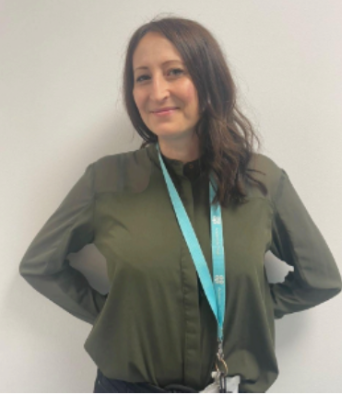
I’m Lucy Wilton, and I am the Semi-formal Pathway Lead at Co-op Academy Brierley. I have twenty four years of experience working with children and young people, first as a dance and drama teacher in a North London Performing Arts Centre, then working with special schools and specialist provisions in North West London. This role led me to teaching and after eighteen years in mainstream schools, I made the exciting decision to move to work in a specialist provision and joined Co-op Academy Brierley in September 2023.
The curriculum model that we are building for the Semi-formal pathway has communication at its core. Opportunities to develop independence skills are planned into all sessions with adaptive teaching and differentiated access to the National Curriculum. Support with communication, regulation and sensory needs are embedded in the school day allowing learners to have the opportunity to succeed together in a vibrant, joyous environment where differences are celebrated and the environment is tailored to promote success in various forms.
Show you care - positive relationship building
At Co-op Academy Brierley, children’s well-being is central to our provision planning. Relationships are the driver to access and attendance. We get to know our families’ and children’s personal interests creating a team approach to personalising each child’s school experience.
Our home school communication allows families to feel part of their child’s experience and to have their voice heard. Brierley Best behaviour is threaded throughout the learning environment so that restorative practice and relationships support a nurturing environment built on high expectations and trust. Along with your child’s class teacher, we have a team of staff to support you as a family and we are available via the Class Dojo app, by phone or email, to ensure we do our Brierley Best for you. In addition to this, we host coffee mornings and in-person meetings alongside the offer of online meetings or home visits for those families who may not be able to travel to us.
Our class teams provide structure and routine to create repetition and predictability whilst supporting learners to try new experiences and develop strategies to support unexpected changes. Through predictable and irresistible learning experiences, learners are able to build on their knowledge and understanding in an environment adapted to suit their individual needs. An ambitious adapted curriculum, movement breaks and sensory-seeking opportunities are embedded in the Semi-Formal school day. Tasks may be partitioned, completed straight after a group session, or re-visited supporting overlearning and consolidation. This supports confidence building, enhanced self-esteem and learners’ willingness for self-exploration and independence.
In addition to this, tasks are taken to the learner and adaptations around expectations of sitting at a desk are relieved allowing learners to focus on the challenge and towards achieving their ‘Brierley Best Self’. Every topic is launched with a ‘Spectacular Start’ to provoke curiosity and a ‘Fabulous Finish’ to celebrate the learning. We share our successes on Class Dojo with ‘Glimmers of the Week’ photographs so families can see the wonderful things their child has been achieving in school and can interact with other families from their child’s class should they wish to do so.
Be yourself always - a curriculum that empowers learners
The curriculum model that we are building for the Semi-formal pathway has communication at its core. Opportunities to develop independence skills are planned in all sessions with adaptive teaching and differentiated access to the National Curriculum. Support with communication, regulation and sensory needs are embedded in the school day, allowing learners to have the opportunity to succeed together in a vibrant, joyous environment where differences are celebrated, and the environment is tailored to promote success in various forms.
What does 'Brierley Best Self' look like in Semi-Formal?
In the Semi-Formal Pathway, we want our learners to:
- Develop positive and trusting relationships with their class team and peers
- Develop confidence and self-esteem
- Enjoy accessing different learning environments
- Find ways to express wants and needs through the most appropriate communication strategies
- Develop curiosity and play through opportunities for self-exploration
- Develop Personal, Social, Emotional Development through meaningful interactions with adults and peers
- Build relationships with families and the wider community
- Be supported to identify feelings and develop personalised regulation strategies to support well-being
- Engage in opportunities to develop independence skills and personal care in preparation for adulthood
- Build strategies to support access to new experiences and unexpected changes
Do What Matters Most - Our Ambitious Curriculum
We have developed a four-year curriculum, looking at National Curriculum coverage allowing an adapted curriculum with opportunities to revisit core learning and embed new skills. Sessions are delivered as whole group sessions with opportunities to work in small groups or one-to-one independent tasks. Sessions are adapted to match each learners’ pace and development stage. Alongside this, each child will have up to three Personal Learning Goal (PLG) sessions a day to support their global EHCP targets.
Communication – Everyone Has a Voice
Building communication skills is integral to learning within our pathway. All pupils are treated as intentional communicators with an ‘assumed competency’ from the staff team. We believe everyone has something to say and everyone can learn.
The communication needs of each pupil in our pathway are observed and baselined using SCERTs assessment framework and by our SALT team. As a result, they are supported with the most appropriate communication system/s for them to use both at home and school. For some learners, this may begin with Objects of Reference (OOR) where words are represented by real-life objects. Learners may progress to visual symbols through communication boards to encourage functional communication, independence and speech. Gesture, vocalisations, body and eye movements are additionally encouraged to express their wants and needs.
Each class team uses basic Makaton signs to support the children’s existing communication skills and Intensive Interaction is integral to supporting communication and spontaneous play. Daily Attention Autism sessions, Sound Time, Phonics and story time are planned through a total communication approach.
Building Independence
We provide our students with a safe and nurturing learning environment where forming positive relationships and building trust with new people supports learners' mutual regulation. The pathway uses whole class visual timetables and individual timetables offering learners opportunities to make choices and develop independence skills. We pride ourselves in making the learners’ experience of school exciting and special for them and their families. Predictable structured routines scaffold every learning experience and support pupils self-regulation. Every learner uses a whole class or individual timetable to support them in accessing spaces and sessions throughout the day. Objects of Reference are available as an additional transitional support. Our weekly timetable gives opportunities to explore our Life Skills kitchen, farm and forest school, sensory rooms, immersive suite, sensory circuits assembly hall and playgrounds.
Personalisation – A Curriculum That Fits the Child
Every learner has a Pupil Profile which is reviewed termly, new targets are shared with parents and progress tracked using Evidence for Learning. All families have access to Class Dojo where teachers communicate daily with parents to share photos and messages about their child’s day in school.
Succeed Together - measuring and celebrating progress
We use Evidence for Learning to track pupil progress and development at the end of each term. This attainment data is used to update individual Pupil Passports and ensure targets are appropriate and achievable. To ensure we identify our learners' successes and gaps in their understanding, we have created robust progression step documents for each area of learning and teachers use these to identify next steps and plan for progression.