
Informal Pathway
In the Informal Curriculum Pathway, predictable structured routines scaffold every learning experience and support pupils' self-regulation.
Introduction from Informal's Pathway Lead - Ellie Bounford
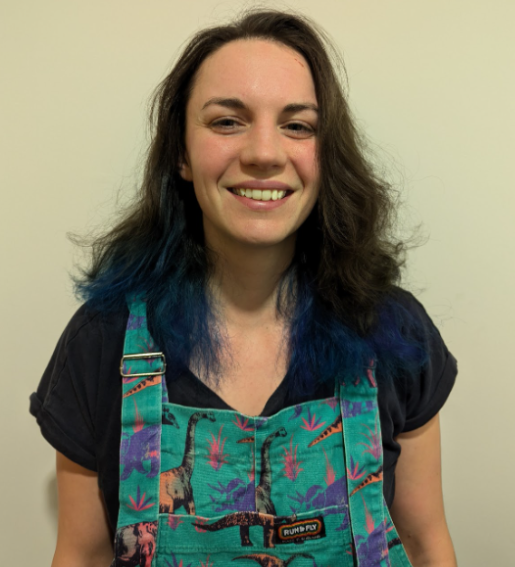
I’m Ellie, the Informal Pathway Lead at Co-op Brierley. I have worked in SEND specialist settings for over 10 years, with children with varying learning needs mainly in Cambridgeshire. I relocated to Leeds in August to join the Brierley family. I am passionate about inclusive education, and hold three specialist degrees in the field.
The Informal Pathway curriculum is designed to help all students develop their learning skills. Communication and regulation are at the heart of our learning experiences in Informal Pathway classes. We aim for all students to develop these skills, to become as independent as possible and express themselves in the ways that work for them.
We utilise sensory, immersive, and experiential activities to entice students into learning opportunities, draw out high quality engagement, and offer an enriching and creative school experience. Learning is built around each individual’s EHCP outcomes, and their interests, as well as our own small steps of progress framework. Our goal is for every student to engage in all areas of learning and, most importantly, have fun doing so!
Show you care - positive relationship building
At Co-op Academy Brierley we want to maintain positive and trusting relationships with our families and we know that communication barriers and complex needs can present a range of challenges and worries. Along with your child’s class teacher, we have a team of staff to support you as a family and we are available via the Class Dojo app, by phone or email, to ensure we do our Brierley Best for you.
For new pupils, this begins with a home visit for all new learners starting in the Informal Pathway along with a personalised induction plan, including stay and play sessions in the term prior to starting school.
For learners and families already a part of the Brierley Community, a thorough transition process takes place in school towards the end of your child’s time in the Foundation Pathway. The Foundation Pathway team will begin their final assessments and recommend the most appropriate pathway for your child’s onward learning journey. The transition process includes: observations by the new pathway team; handover meetings with current and new teachers; meet the teacher opportunities for families; and an internal ‘stay and play’ transition morning.
For all children in school, we work collaboratively with families through daily communication by phone or Class Dojo, to ensure that individual needs of the children are met and pupil’s progress and ‘wow’ moments are shared. Engage and Explore sessions are also held in Informal Pathway to involve families in their child’s learning experiences, along with celebrations at the end of each term for our ‘Fabulous Finishes’.
Be yourself always - a curriculum that empowers learners
The majority of learners joining the Informal Pathway will transition from Year 3, whether as part of an internal transition from our Foundation Pathway or as an external transition from another setting. Learners with a wide range of severe and complex needs join the Informal Pathway and access our Informal Pathway Curriculum, which is built upon the Early Years Foundation Stage (EYFS) curriculum and mapped to extend into the Key Stage 1 National Curriculum. The curriculum is designed to entice all pupils into meaningful and challenging learning experiences. In our Informal Curriculum Pathway, the focus is to build and develop functional communication and communication for learning, using each pupil’s unique learning style to enhance engagement.
What does 'Brierley Best Self' look like in Informal?
In the Informal Curriculum Pathway we want our learners to:
- Establish safe relationships with adults and peers built on trust, respect, and autonomy;
- Feel confident to access different learning environments;
- Continue to develop ways to express wants and needs through the most appropriate communication strategies;
- Apply and explore established play sequences to develop and generalise skills;
- Broaden curiosity by exploring the world around them;
- Continue to develop movement and Personal, Social, Emotional Development throughout all interactions and learning experiences, including continuous provision;
- Enjoy strong, positive, communicative relationships between school and home that recognise and celebrate the important role of family in each child’s learning community.
Do what matters most - our ambitious curriculum
Our Informal Pathway leader has developed a three year rolling curriculum, with coverage across the seven areas of learning. The curriculum is built upon the EYFS, extending into the KS1 National Curriculum, and incorporating the Engagement Model. The Informal Curriculum provides a variety of opportunities to embed new skills and make connections in knowledge through structured, adult-led sessions. These sessions are short, irresistible, and predictable for learners, and adults will support them in small groups or individually to match their stage of development.
The seven areas of learning are:
- Communication and language development
- Personal social emotional development
- Physical development
- Literacy; including Sound Time/ Read Write Inc phonics and TalkforWriting
- Mathematics
- Understanding of the world
- Expressive arts and design
Building Effective Engagement - The Engagement Model
Learners are also supported to build effective engagement across the five areas of engagement through all learning activities and continuous provision (both indoors and out) throughout the school day, where our skilled staff support their play sequences and promote developing communication towards personal learning goals.
The five Areas of Engagement outlined in The Engagement Model are:
- Exploration - where learners investigate and experience new things, building on their initial reaction to a stimulus to purposefully engage with and investigate a stimulus or activity;
- Realisation - where learners actively discover and demonstrate awareness of new aspects of an activity, action, or stimulus through exploration;
- Anticipation - where pupils develop and embed the ability to predict, expect, and associate stimuli or activities with an event, interpreting cues from the environment and those around them;
- Persistence - where learners concentrate and keep on trying when they encounter difficulties, actively engaging for extended periods and discovering more as a result;
- Initiation - where learners act spontaneously or independently to investigate stimuli or activities in different ways or in different contexts.
Communication – Everyone Has a Voice
Developing, extending, and embedding communication skills is integral to learning within our pathway. All learners are treated as intentional communicators and we apply an ‘assumed competency’ model, meaning that we believe everyone has something to say and everyone can learn.
The communication needs of each learner in our pathway are regularly observed and formatively assessed, using the SCERTS assessment framework and in consultation with our SALT team. Initially, the handover information shared within their transition plan provides a baseline for communication, with a review taking place after a few weeks.
If a learner is new to school, they will be observed and a baseline established, using the SCERTS framework and SALT advice, within their first few weeks at Brierley. As a result, they are supported with the most appropriate communication system/s for them to use both at home and school. For some learners this may begin with OoR (Objects of Reference) where words are represented by real-life objects. Learners may progress to visual symbols through communication boards to encourage functional communication, independence, and speech. Gesture, vocalisations, body, and eye movements are additionally encouraged to express their wants and needs.
Each class team uses basic Makaton signs to support the existing communication skills of all learners and Intensive Interaction is essential for supporting learners in 1:1 sessions, spontaneous play, and in developing engagement. Daily Attention Autism, Sound Time and Literacy sessions are planned through a total communication approach.
Building independence
We provide our students with a safe and nurturing learning environment where positive relationships built on trust and respect support learners' mutual regulation. The pathway uses a child-led approach offering learners opportunities to make choices and develop independence skills, including autonomy. We pride ourselves on making the learners’ experience of school exciting and special for them, and their families.
In the Informal Curriculum Pathway, predictable structured routines scaffold every learning experience and support pupils' self-regulation. Every learner uses either objects of reference, an individual timetable and/or travel boards to support them in accessing new learning experiences and the different learning environments around school. Our daily timetable enables opportunities to explore our Life skills kitchen, farm, forest school, sensory rooms, immersive suite, sports hall, and playgrounds.
Personalisation – A Curriculum That Fits the Child
Every learner has a Pupil Passport which is reviewed termly, with new targets set with parents and progress tracked against our assessment framework and the Engagement Model using ‘Evidence for Learning.’
All families have access to Class Dojo where teachers communicate daily with parents to share photos and messages about their child' s day in school.
In the Informal Curriculum Pathway we want to build our learners' communication, independence, and engagement by following their interests and fascinations. Therefore provision is planned using the topic theme AND by observing learners interests and setting up learning experiences that are meaningful to them.
Wellbeing – Supporting the Whole Child
Personal social and emotional development is integral to every session, with high adult-to-child ratios enabling staff to build trusting relationships and support mutual regulation. Staff support each learners’ personal learning journey through high-quality interaction across the areas of provision; identifying learners interests, and working towards their Personal Learning Goals together.
Physical development is integral to the timetable with movement sessions; indoors, outdoors, and using sensory integration provision. Every class is equipped with movement areas and learners access our forest school, farm, rebound, and sensory rooms for targeted sessions as well as outdoor play. All learners access daily Sensory circuits sessions.
Succeed Together - measuring and celebrating progress
We use ‘Evidence for Learning’ to track pupil progress for all learners in each area of learning, personalised learning goals (EHCP), and the Engagement Model at the end of each term. This attainment data is used to update individual Pupil Passports and ensure targets are appropriate and achievable. To ensure we are identifying our learners' successes, we have created robust progression step documents for each area of learning and teachers use these to identify next steps and plan for progression.
Our pathway builds upon the foundations of ‘What Matters Most’ for each individual child to continue to map the most fitting learning path for them on their learning journey. This is done through continuing to observe the child’s ‘communication’, ‘cognition and learning’, ‘personal social and emotional’ and ‘physical and sensory’ needs, applying provisions from their EHCP and enabling access to further enrichment through our wider school offer. Proactive and collaborative discussions with families and professionals enhance and inform our ongoing assessment processes, supporting us to create a flexible and adaptive approach that is right for each child.